


Bellinturf News
Learn about the key points of artificial grass installation and maintenance, and use the product better to create more value
MOST POPULAR ARTICLES
- Aug 11, 2026Why Artificial Turf Performs Better Than Natural Grass During SummerDiscover why artificial turf outpaces natural grass during hot summer months. Learn how synthetic grass saves water, cuts maintenance costs, and stays evergreen.
- Jul 28, 2026Six Football Pitches in Brazil Achieve FIFA QUALITY CertificationWe are proud to announce that six football pitches in Brazil have now passed FIFA QUALITY certification with Bellinturf’s football turf system.
- Jul 22, 2026Why Artificial Green Walls Are Gaining PopularityArtificial Green Walls have become a practical solution for projects that require attractive greenery with minimal maintenance. From hotels and offices to restaurants, retail spaces and residential gardens, they are being used to create vibrant environments where natural plants may be difficult or costly to maintain.
- Jul 06, 2026How Can You Identify a Reliable Football Turf Supplier?Daily community use and competitive matches place constant pressure on a football surface, so a synthetic pitch has to do more than look good when it’s first installed. It needs to keep its shape, hold the yarn securely, withstand wear from repeated play, and stay stable under various outdoor conditions. Because when those qualities are not built into the system itself, the field will start to lose performance long before the end of its expected service life.
That’s precisely why FIFA certified football turf is often used as a reference point during supplier evaluation for artificial grass wholesalers.
Leave us your e-mail address to sign up for our newsletter. We'll send you the latest news from our blog.
How Can You Identify a Reliable Football Turf Supplier?
Daily community use and competitive matches place constant pressure on a football surface, so a synthetic pitch has to do more than look good when it’s first installed. It needs to keep its shape, hold the yarn securely, withstand wear from repeated play, and stay stable under various outdoor conditions. Because when those qualities are not built into the system itself, the field will start to lose performance long before the end of its expected service life.
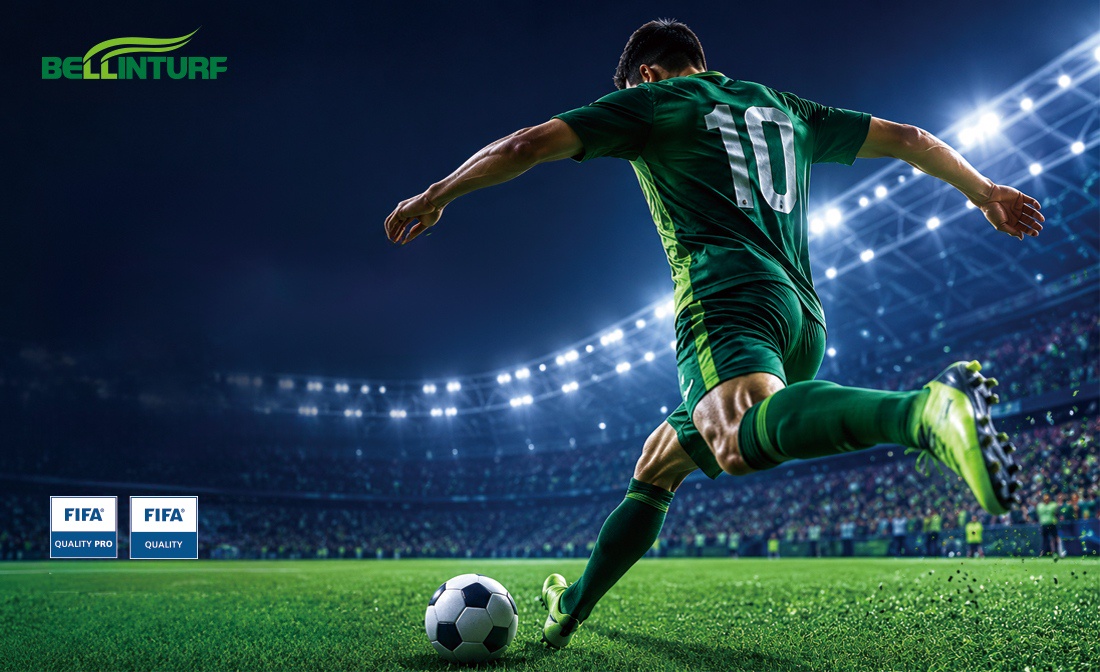
That’s precisely why FIFA certified football turf is often used as a reference point during supplier evaluation for artificial grass wholesalers.
The Importance of FIFA Certification
The FIFA Quality Programme helps buyers evaluate football turf systems against established performance requirements. Products that achieve certification undergo testing for characteristics such as ball roll, ball rebound, shock absorption, vertical deformation, rotational resistance, and durability. While certification alone does not determine whether a surface is suitable for every project, it provides an objective benchmark when comparing football turf options.
How FIFA Certification Shapes Manufacturer Standards
A FIFA certified manufacturer develops football turf systems within the requirements of the FIFA Quality Programme –– meaning the system is evaluated against defined criteria rather than solely on performance claims. For manufacturers, those criteria influence how the turf is designed, tested, and documented before it is used in a certified football pitch.
Bellinturf has been a FIFA certified manufacturer since 2013. The company operates five production bases across multiple countries, delivers products to more than 100 countries worldwide, and holds an estimated 12.9% global market share.

How Synthetic Turf Yarn Responds to Repeated Wear
Durability in synthetic football grass is largely determined by how the yarn responds to repeated abrasion. Wear resistance synthetic turf yarn is designed to reduce splitting, flattening, and surface breakdown as the pitch is exposed to regular football movement and maintenance.
This is why Lisport testing is useful. Instead of testing turf only in its original condition, this method directly evaluates performance after wear, providing a more accurate assessment of durability and long-term quality. Bellinturf notes that some of its football turf systems can achieve outstanding abrasion resistance performance through Lisport testing, with the highest-performing systems reaching over 400,000 cycles.
UV Stability and Weathering Performance
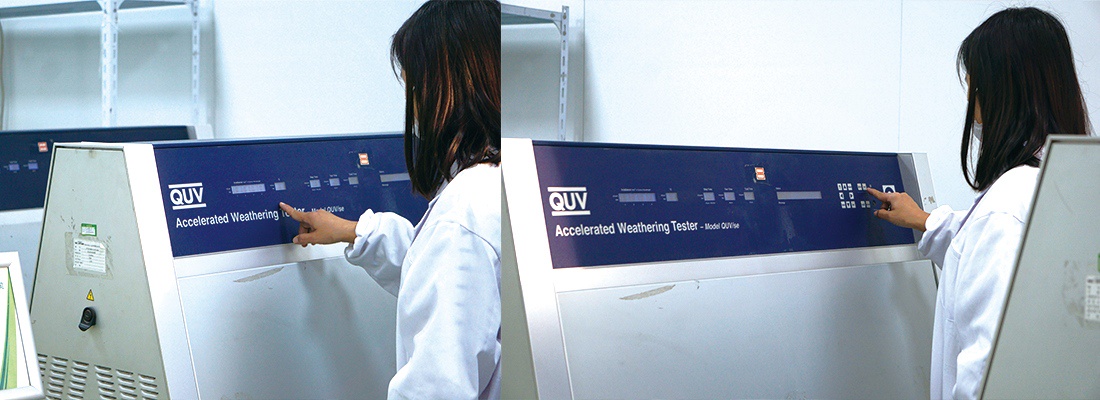
In Bellinturf’s football turf specifications, UV resistance is reflected by colour retention performance after artificial weathering tests. While a Grey Scale rating above Grade 3 is generally considered acceptable, selected Bellinturf football turf systems can achieve up to Grade 4–5, providing enhanced colour retention and long-term durability. Several football turf systems also reference high UV stability, strong colour fastness, and anti-aging performance as part of their design characteristics.
These specifications provide a measurable way to assess how UV-resistant synthetic turf yarn responds to outdoor exposure. Instead of relying only on the initial colour or appearance of the surface, artificial weathering results show how the material performs under controlled exposure conditions.
High Tuft Withdrawal Force
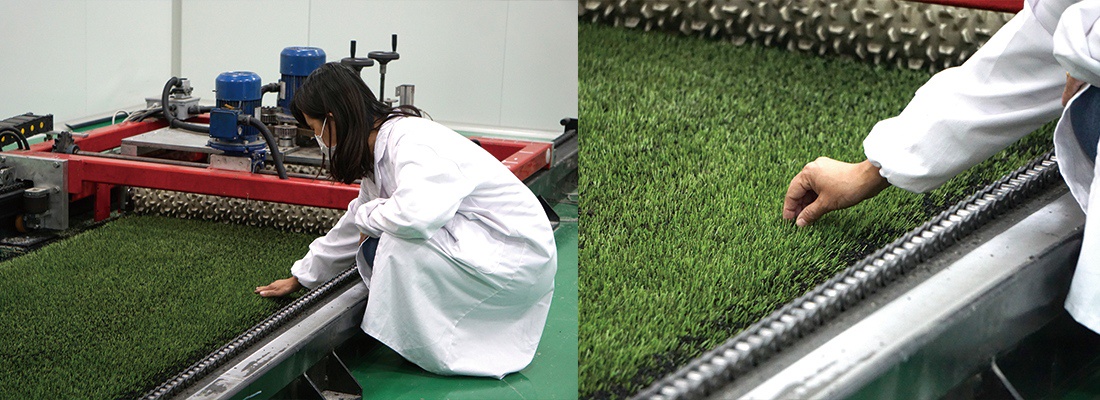
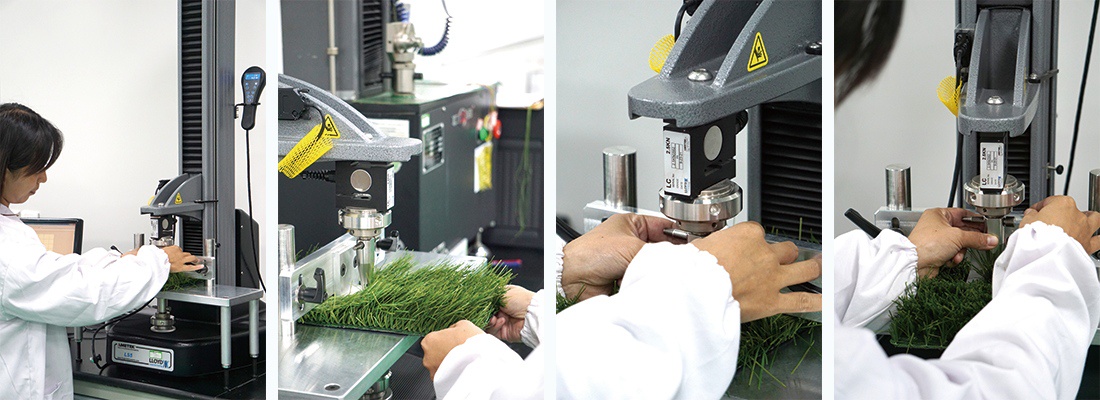
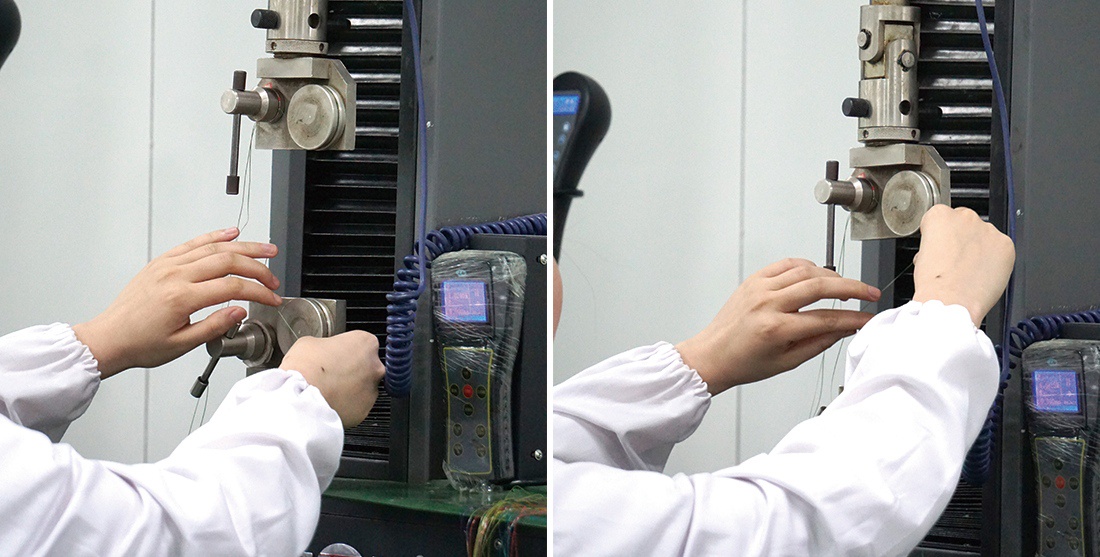
Unlike wear resistance testing that focuses on the condition of the yarn itself, tuft withdrawal force assesses how effectively the fiber remains anchored within the turf system. FIFA standards require a minimum tuft withdrawal force of ≥40N at 70°C after 336 hours of water –– a measurement often used alongside wear testing to assess the material's interaction.
Bellinturf football turf systems apply this through updated backing structures and tuft-lock design, with selected products including high withdrawal force as part of their performance profile.
Playing Characteristics Within a Certified System
In FIFA certified football turf, playing characteristics are evaluated as part of the full surface system. Meaning, the focus is not only on yarn durability, but also on measurable performance characteristics such as ball roll, ball rebound, shock absorption, rotational resistance, and vertical deformation. These factors help determine how the finished surface performs during play.
Bellinturf football turf systems are developed around this full-system approach –– with product specifications reference like fiber performance, resilience, player comfort, and reduced skin friction alongside abrasion resistance and tuft withdrawal force. With Bellinturf, playing performance is a tested system outcome rather than a separate feature added after durability requirements are met.
System Options for Project-Specific Requirements
A synthetic football pitch is typically specified according to several factors, such as usage level, climate, maintenance expectations, certification requirements, etc. For that reason, football turf systems vary by yarn shape, backing construction, pile height, color, and surface behavior.
Bellinturf provides more than one hundred football turf systems with over one thousand possible combinations, allowing customized solutions for different project requirements. The range includes FIFA Quality and FIFA Quality PRO certified systems developed for various playing conditions.Learn More About Bellinturf Football Turf Systems
Bellinturf develops complete football turf systems rather than individual turf components, which is consistent with how FIFA-certified pitches are evaluated as integrated surface systems.
To learn more about Bellinturf football turf systems, FIFA certified football turf solutions, and available product options for synthetic football pitch projects, contact the team for additional information.
Frequently Asked Questions
What is FIFA certified football turf?
FIFA certified football turf refers to football turf systems that have successfully met the testing requirements established by the FIFA Quality Programme.
What influences the durability of a synthetic football pitch?
Yarn construction, backing design, coating technology, abrasion resistance, tuft withdrawal force, and UV stability all influence the durability of a synthetic football pitch.
How is tuft withdrawal force measured?
Tuft withdrawal force measures the amount of force required to extract a turf fiber from the backing system. FIFA standards specify minimum performance requirements for this measurement under defined testing conditions.
What is artificial weathering used to assess?
Artificial weathering is used to evaluate how turf materials respond to controlled environmental exposure over time. The testing is commonly used to assess characteristics such as UV stability, colour fastness, and material performance.
Why are football turf systems offered in multiple configurations?
Football turf systems are specified according to project requirements, which may include performance targets, usage levels, climate conditions, maintenance expectations, and certification objectives. As a result, manufacturers often offer multiple yarn, backing, and system configurations.
Bellinturf
Get in Touch
