


Bellinturf News
Learn about the key points of artificial grass installation and maintenance, and use the product better to create more value
MOST POPULAR ARTICLES
- Sep 22, 2026How to Choose the Right Artificial Turf for Your Project?Choosing the right artificial turf is an important decision for any project. Different applications require different turf structures, performance, and specifications. Before making purchase, here are several key factors you shoulder consider.
- Sep 08, 2026Why Artificial Grass Works for School Outdoor SpacesAs schools look for outdoor surfaces that can support these activities while keeping maintenance manageable, artificial grass for schools has become a practical option for a wide range of applications.
- Aug 21, 2026How UV Protection Makes Artificial Turf More DurableUnderstanding UV resistance, fiber durability, and long-term outdoor performance.
- Jun 04, 2026Why Bellinturf is the Preferred Choice for High-Traffic Commercial SpacesWe make our turf to handle heavy daily use. Even when even in high-traffic areas, our turf stays upright and looks natural. It offers a natural aesthetic that brings life to any indoor or outdoor space.
Leave us your e-mail address to sign up for our newsletter. We'll send you the latest news from our blog.
How UV Protection Makes Artificial Turf More Durable
Artificial turf is designed to provide a consistent, low-maintenance green surface for years. But because it is often installed outdoors, it is constantly exposed to sunlight, including ultraviolet (UV) radiation.
Over time, prolonged UV exposure can accelerate the aging of synthetic materials, potentially affecting color, flexibility, strength, and overall turf performance. This makes UV protection an important consideration when selecting artificial grass for outdoor applications.
So how does it help artificial turf perform in challenging outdoor environments?
Why Does UV Protection Matter for Artificial Turf?
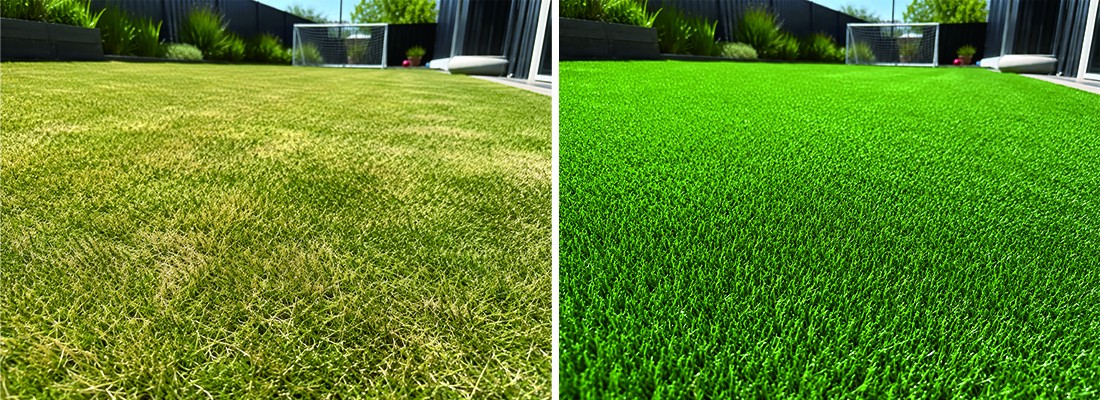
UV radiation is a natural part of sunlight. While artificial turf is manufactured to withstand outdoor conditions, continuous exposure to UV rays can gradually affect the polymers used in synthetic grass fibers.
Without sufficient UV stabilization, prolonged exposure may contribute to:
Color fading
Fiber degradation
Loss of flexibility
Reduced fiber strength
Premature material aging
For landscaping, sports fields, commercial spaces, and other outdoor applications, these effects can influence not only the appearance of the turf but also its long-term performance.
That is why UV resistance should be considered an important part of artificial turf quality—not simply an additional feature.
How Does UV Protection Work?
Effective UV protection begins with the materials and manufacturing process.
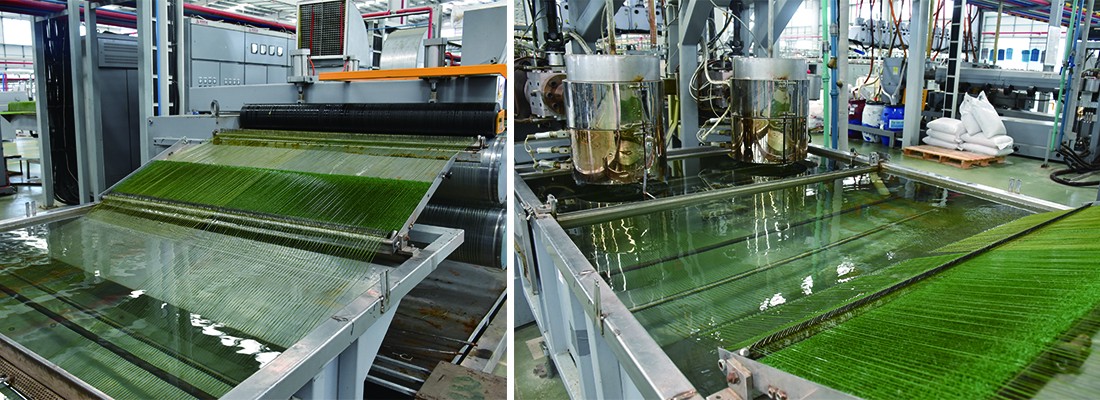
UV stabilizers can be incorporated into the synthetic material during yarn production. These stabilizers help reduce the damaging effects of prolonged UV exposure on the polymer structure.
Unlike protection that is simply applied to the surface of a finished product, material-level UV stabilization is designed to provide protection throughout the yarn.
This is why the manufacturing process matters.
The quality of the raw materials, yarn formulation, UV stabilization technology, and production controls can all influence the long-term durability of artificial turf.
Built Into the Yarn
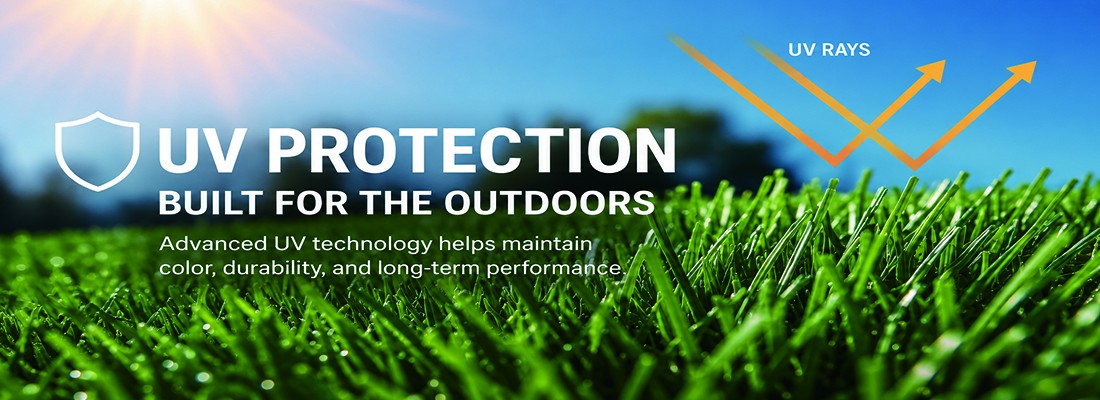
High-quality artificial turf should be engineered with UV resistance as part of the yarn formulation and manufacturing process.
This approach helps the fibers better withstand long-term outdoor exposure while supporting:
Color Retention
Helping the turf maintain a consistent and natural appearance.
Fiber Durability
Helping synthetic fibers resist premature degradation caused by prolonged UV exposure.
Long-Term Performance
Supporting stable physical properties during extended outdoor use.
Product Longevity
Helping reduce premature aging of the turf system.
Why UV Resistance Matters in Different Climates
Not every artificial turf installation faces the same environmental conditions.
In regions with intense sunlight and prolonged outdoor exposure, UV resistance becomes particularly important. This includes tropical, subtropical, arid, and other high-sunlight environments.
Artificial turf may also be installed in locations such as:
Open sports fields
Rooftops and terraces
Gardens and residential yards
Commercial landscapes
Public parks
Outdoor recreational areas
Poolside environments
In these applications, the turf can be exposed to sunlight for many hours throughout the year.
Therefore, choosing a product with appropriate UV resistance can be an important factor in maintaining long-term appearance and performance.
How to Choose UV-Resistant Artificial Turf
When choosing artificial turf for outdoor use, consider these key factors:
1. UV Stabilization
Check how UV protection is incorporated into the yarn and manufacturing process.
2. Yarn Quality
High-quality materials and yarn formulation are essential for long-term durability.
3. Testing & Technical Data
Review relevant test results and technical specifications when available.
4. Application & Climate
Choose turf according to local sunlight, climate, installation environment, and usage.
5. Manufacturer Experience
Look for a manufacturer with proven production capabilities, quality control, and technical support.
Bellinturf
Get in Touch
